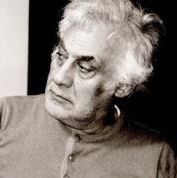
About Mohammad Fassounaki
Mohammad Fassounaki was born on December 17, 1943, in Tabriz. His artistic journey began in 1956 when he entered the Tabriz Conservatory of Music. However, his focus soon shifted toward the visual arts after enrolling at the Tabriz School of Painting under the supervision of the modernist painter Hossein Kazemi. There, Fassounaki studied with artists such as Morteza Ressam Nakhjavani, gaining a strong foundation in classical techniques and Impressionist approaches to color.
He later moved to Germany to continue his studies and, in 1968, enrolled at the State Boarding School of Art in Frankfurt, where he studied under several German instructors. During this period, he became drawn to the works of German Expressionists, whose emotional intensity and sensitivity to color left a lasting influence on him. Toward the end of his studies, he developed an interest in Picasso’s Analytical Cubism, which further shaped his evolving visual language.
After completing his studies in Frankfurt, Fassounaki moved to Italy and, in 1970, entered the Academy of Fine Arts in Rome to study painting. Two years later, he began studying sculpture at the same institution. Early during his stay in Italy, he participated in two group exhibitions — one in Venice and another at the W. H. S. Hall in Frankfurt.
Fassounaki returned to Iran in 1973 and settled in his hometown of Tabriz. His first solo exhibition was held at the Mirak Art School in 1974. That same year, he presented a solo show of drawings and paintings at Ghandriz Hall in Tehran. In 1975, he exhibited at the Iran–America Society in Tabriz and took part in further exhibitions at the Mirak Art School in Tabriz, as well as Seyhoun Gallery and Tehran Gallery in Tehran.
His return to Iran coincided with a politically and socially charged period in the country, when art was increasingly engaging with social realities. This environment gave Fassounaki’s work a distinctly realist orientation. Ten years later, he moved to West Berlin, where he lived for three years before returning to Iran in 1986. Following his return, his paintings increasingly reflected the everyday social life of Iranian people — a focus that remained central to his practice. Even when he drew on themes from tradition or nature, these motifs often carried symbolic or metaphorical meaning.
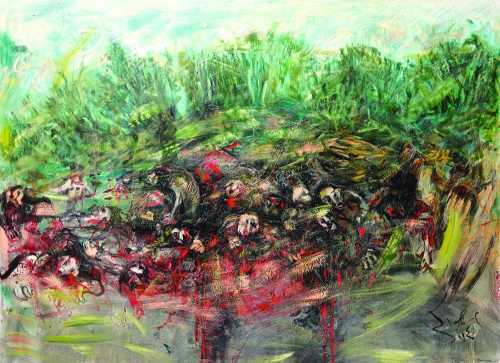
Between 1996 and 1999, Fassounaki held several exhibitions in Tehran and Tabriz, expanding his presence in the capital throughout the 2000s. In the early 2000s, he abandoned oil paint in favor of acrylic — a shift that brought brighter colors, fluid textures, and a dripping technique to his canvases, pushing some of his works to the edge of abstraction.
The Most Expensive Artwork
At Auctions
First Attendance
12 August 2021
# Attendance
6
# Artworks
6
Average Realized Price
6,951 USD
Average Min Estimate
3,352 USD
Average Max Estimate
4,710 USD
Sell-through Rate
100%
Average Growth of Artwork Worth
52.543%
Timeline
Face to face, Eye to eye exhibition
17 July
Evermore exhibition
10 June
Collector exhibition
29 May
Selection exhibition
29 May
Extension exhibition
16 April
Artibition Auction - Dec 2025 auction
12 December
580 Nanometers / Yellow exhibition
28 November
Collection No.1 exhibition
7 November
Nature in Transit exhibition
24 October
CHARSOO- Part 2 exhibition
3 October
Charsoo exhibition
5 September
Surroundings exhibition
8 August
Black on White exhibition
4 July
The 23rd Tehran - Modern and Contemporary Iranian Art auction
22 May
Dance of the Flowers exhibition
7 March
Modern and Contemporary Collector exhibition
7 February
Disfigure exhibition
3 January
Landscape Plateau exhibition
13 December
Narrative and Material exhibition
8 November
Abstract Illusions exhibition
11 October
Resize exhibition
16 August
"Bitter, Sweet, Burden" Iranian Perspective, Three Views exhibition
9 August
The 20th Tehran- Modern and Contemporary Iranian Art auction
5 July
+-50 exhibition
15 March
10s of Artworks, 10s of Millions exhibition
8 March
Art Advisory exhibition
8 March
A Glance at Sketching exhibition
8 March
Beyond Two Dimensions exhibition
2 February
Artworks By Naturalist Master Artists exhibition
26 January
Modern Collectore exhibition
19 January
Mohammad Fassounaki exhibition
8 December
Arthibition auction
20 October
Collector - Modern exhibition
29 September
A Selection of 70 Years of Iranian Sculpture exhibition
4 August
Honoured Audience exhibition
5 May
Art Closer Than Ever exhibition
26 August
XL exhibition
20 May
Resize exhibition
13 May
Manufact exhibition
25 March
Nowruz Festival of Rivers exhibition
10 March
Process exhibition
25 February
The First Fertile Element exhibition
18 February
Opportunity exhibition
13 February
Gaze it exhibition
11 February
Mirror reflections exhibition
19 January
A review of the works of Mohammad Fasunki; From Amir Yeganeh collection exhibition
31 December
No.9 auction
3 September
The 14th Tehran- Contemporary Iranian Art auction
12 August
8th Collector exhibition
9 July
Small Artworks collection exhibition
11 June
Painting, group exhibition exhibition
24 April
Collector 7 exhibition
5 February
Mohammad Fassounaki: 70s Paintings and Drawings exhibition
6 December
Mohammad Fassounaki exhibition
7 December