Dubai,
Dubai, No. I-87, Alserkal Avenue, PO Box 413991 Al Quoz 1, Dubai, UAE
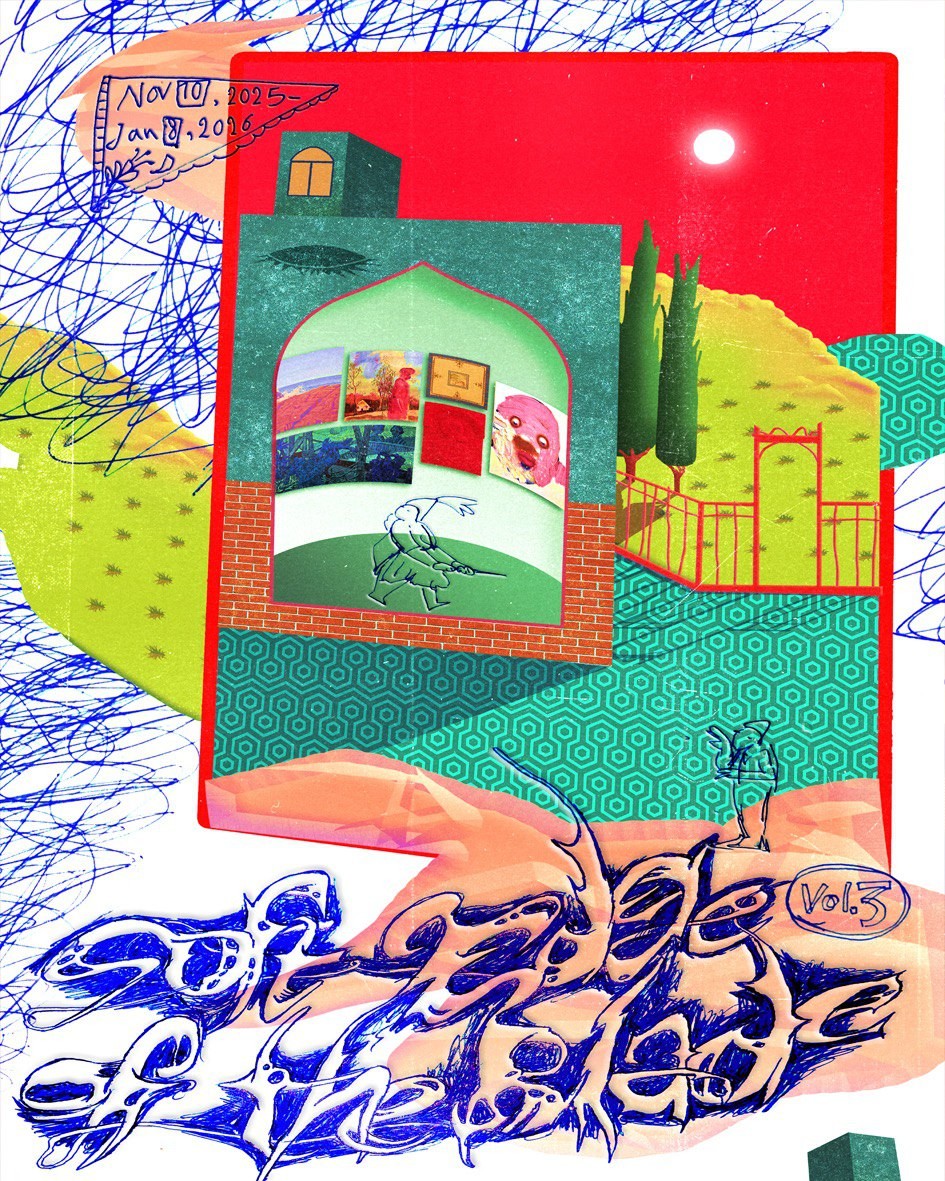
10 November 2025 - 8 January 2026
Zaal Art Gallery, in collaboration with Leila Heller Gallery, proudly presents Soft Edge of the Blade Vol. 3, on view from November 10 to January 8.
Following acclaimed presentations in London (2022) and Toronto (2023), Soft Edge of the Blade returns for its third edition—this time in Dubai. Continuing its inquiry into the many faces of violence, this series turns its gaze to the region where the very notion of “the Middle East” has been shaped through a vocabulary of conflict. But here, in this third act, the exhibition proposes something quieter, more persistent: What if the violence we fear is already within us—codified in language, tradition, memory, and even beauty?
Soft Edge of the Blade Vol. 3 brings together the works of nine contemporary Iranian artists whose practices span painting, sculpture, photography, and graphic forms. Together, they offer a multifaceted exploration of violence not as spectacle, but as residue—soft, systemic, and often unseen. This edition revisits and re-questions the themes explored in the previous shows: the forms of symbolic, hidden, and insidious violence that emerge through diaspora, gender, family structures, censorship, and the burden of history.
From the trace of a blade across the surface of a portrait by Farrokh Mahdavi to the theatrical dismemberment staged in a miniature by Farah Ossouli, from Homa Delvaray’s symbolic typography—where blood drops from the tip of the blade and language cuts deeper than steel—to the sweeping strokes of Mohebali and Nodjoumi that churn with unrest—each work speaks to the wound that doesn’t bleed, the violence that is neither immediate nor loud. Bita Fayyazi adds a sculptural snarl to the room—a mythic form on the brink of comedy and dread. The collaborative miniature by Maryam Ayeen and Abbas Shahsavar merges tradition with absurdity, placing surveillance, domesticity, and intimacy in a single fractured frame. Morteza Pourhosseini’s haunting realism and Meghdad Lorpour’s crashing waves push the inquiry further—towards a territory not just of human suffering, but of the nature of being itself. Conceived as a transnational project, Soft Edge of the Blade moves across cities and contexts, each edition standing alone while contributing to a broader reflection on violence and image-making.
Presented in Dubai—a city shaped by both cosmopolitan ambition and political tension—this edition invites viewers to reconsider familiar narratives. Can form, color, and language offer new ways of seeing a region often framed through conflict?
Rather than responding to headlines, Soft Edge of the Blade Vol. 3 calls for deeper reflection. The violence continues—but perhaps, through art, it can be perceived differently.
Following acclaimed presentations in London (2022) and Toronto (2023), Soft Edge of the Blade returns for its third edition—this time in Dubai. Continuing its inquiry into the many faces of violence, this series turns its gaze to the region where the very notion of “the Middle East” has been shaped through a vocabulary of conflict. But here, in this third act, the exhibition proposes something quieter, more persistent: What if the violence we fear is already within us—codified in language, tradition, memory, and even beauty?
Soft Edge of the Blade Vol. 3 brings together the works of nine contemporary Iranian artists whose practices span painting, sculpture, photography, and graphic forms. Together, they offer a multifaceted exploration of violence not as spectacle, but as residue—soft, systemic, and often unseen. This edition revisits and re-questions the themes explored in the previous shows: the forms of symbolic, hidden, and insidious violence that emerge through diaspora, gender, family structures, censorship, and the burden of history.
From the trace of a blade across the surface of a portrait by Farrokh Mahdavi to the theatrical dismemberment staged in a miniature by Farah Ossouli, from Homa Delvaray’s symbolic typography—where blood drops from the tip of the blade and language cuts deeper than steel—to the sweeping strokes of Mohebali and Nodjoumi that churn with unrest—each work speaks to the wound that doesn’t bleed, the violence that is neither immediate nor loud. Bita Fayyazi adds a sculptural snarl to the room—a mythic form on the brink of comedy and dread. The collaborative miniature by Maryam Ayeen and Abbas Shahsavar merges tradition with absurdity, placing surveillance, domesticity, and intimacy in a single fractured frame. Morteza Pourhosseini’s haunting realism and Meghdad Lorpour’s crashing waves push the inquiry further—towards a territory not just of human suffering, but of the nature of being itself. Conceived as a transnational project, Soft Edge of the Blade moves across cities and contexts, each edition standing alone while contributing to a broader reflection on violence and image-making.
Presented in Dubai—a city shaped by both cosmopolitan ambition and political tension—this edition invites viewers to reconsider familiar narratives. Can form, color, and language offer new ways of seeing a region often framed through conflict?
Rather than responding to headlines, Soft Edge of the Blade Vol. 3 calls for deeper reflection. The violence continues—but perhaps, through art, it can be perceived differently.